 Program at A Glance








GUIDELINES
The European Association for the Study of Obesity requires use of person-first language and non-stigmatizing images in all written and verbal communications.
PERSON-FIRST LANGUAGE
The use of person-first language is the standard for respectfully addressing individuals living with chronic diseases; we don’t label people because of their illness.
| NON-PERSON-FIRST LANGUAGE | PERSON-FIRST LANGUAGE |
|---|---|
| Obese participants | Participants with obesity or participants living with obesity |
| Obese person | Person with obesity or person living with obesity |
| Morbidly obese patient | Patient with severe obesity or patient living with severe obesity |
| Hypertensive patient | Patient with hypertension or patient living with hypertension |
| Diabetics | People with diabetes or people living with diabetes |
| Demented individual | Person with dementia or individual living with dementia |
| Obese subjects | Participants with obesity |
NON-STIGMATIZING IMAGES
Unfortunately, many public images portray individuals living with obesity in a negative manner. To reduce pejorative portrayals of persons living with obesity, presenters must use non-stigmatizing images. The European Coalition for People Living with Obesity offers an open access image bank that portrays individuals with obesity in ways that are positive and non-stereotypical. These images provide fair and non-biased representation of youth and adults living with obesity https://ecpomedia.org/image-bank/. Using non-stigmatizing images in research can help challenge harmful weight-based stereotypes.
WHY DOES THIS MATTER?
People living with obesity experience bias and stigma across their lifespan and across settings (home, schools, workplaces, media, public spaces, and healthcare environments). Obesity stigma is enacted through social stereotypes about people with obesity. Some stereotypes include:
- People with obesity are lazy, unmotivated, lacking will power, unsuccessful, ugly, and unintelligent.
- Patients with obesity are non-compliant with healthcare recommendations.
- Individuals with obesity do not exercise.
- Individuals with obesity do not eat healthily.
These stereotypes can lead to individuals being treated unfairly in school, the workplace, and healthcare settings. For example, teachers who enact these weight-based stereotypes may have lower expectations from students with a higher weight and may provide fewer learning opportunities to children living with obesity. This can affect children’s educational outcomes and life chances. Experiencing weight stigma has significant consequences for both health and socio-economic well-being. Studies show that weight stigma can increase morbidity and mortality independently of a person’s weight or BMI.
EASO works actively to reduce weight stigma and weight-based discrimination, and believes researchers, healthcare professionals, inclusive language, communications, and practices.
Adhesive materials required for poster mounting will be provided by the organizers.
Participants are kindly advised to mount their posters before noon, preferably during the morning of 12 May.
📍 Poster Location
- Your printed poster will be displayed in the poster area at B5 level of the congress centre.
- It will stay mounted during the entire congress.
- Participants can view it during coffee breaks, lunch, and browsing periods.
📏 Poster Technical Requirements
Your poster must follow these exact dimensions:
- Orientation: Vertical (Portrait)
- Width: 85 cm
- Height: 120 cm
Make sure the printing company prints it exactly in this size so it fits the poster board.
👥 Poster Networking Sessions (Important)
These are the times when you must stand near your poster so participants can discuss your research.
- Wednesday, 13 May — 18:00–19:30
- Track 1: Basic Science
- Track 3: Childhood and Adolescent Obesity
- Thursday, 14 May — 18:00–19:30
- Track 2: Behavioural Science and Public Health
- Track 4: Obesity Management and Intervention
During this time attendees may ask questions and discuss your work.
📅 Poster Viewing Times
General browsing sessions:
- 13 May: 13:00 – 15:00
- 14 May: 13:00 – 15:00
People will walk around and view posters informally.
📦 Poster Removal
You must remove your poster yourself:
- Date: 15 May
- Time: 11:30 – 13:00
⚠️ If it is not removed during this period, the organizers will not be responsible for it.
The Guided Poster Sessions at ECO 2026 are designed to facilitate focused discussions around selected poster presentations. These sessions provide presenters with the opportunity to briefly introduce their work and engage in dialogue with session chairs and fellow participants.
⏱️ Guided Poster Session Structure
- Each Guided Poster presentation will be allocated a total of 5 minutes, consisting of:
- 3 minutes for a brief oral overview of the poster content
- 2 minutes for questions and discussion, moderated by the session chair
- Session chairs are encouraged to actively engage with presenters by asking questions and fostering discussion among participants.
🖥️ Poster Display
- Posters will be displayed on vertical LCD screens in the Poster Area during the track-specific Poster Networking Sessions.
- Presenters are expected to stand by their posters during the relevant session and deliver their short presentation when invited by the session chair.
📅 Session Schedule
- Track 1 & Track 3: Wednesday, 13 May ( 18:00 – 19:30 )
- Track 2 & Track 4: Thursday, 14 May ( 18:00 – 19:30 )
The exact time slot for each Guided Poster presentation, specific to your track, can be found in the congress programme:
https://eco2026.org/?p=program
💡 Additional Notes
- The session format is designed to create an interactive and dynamic environment that encourages meaningful knowledge exchange.
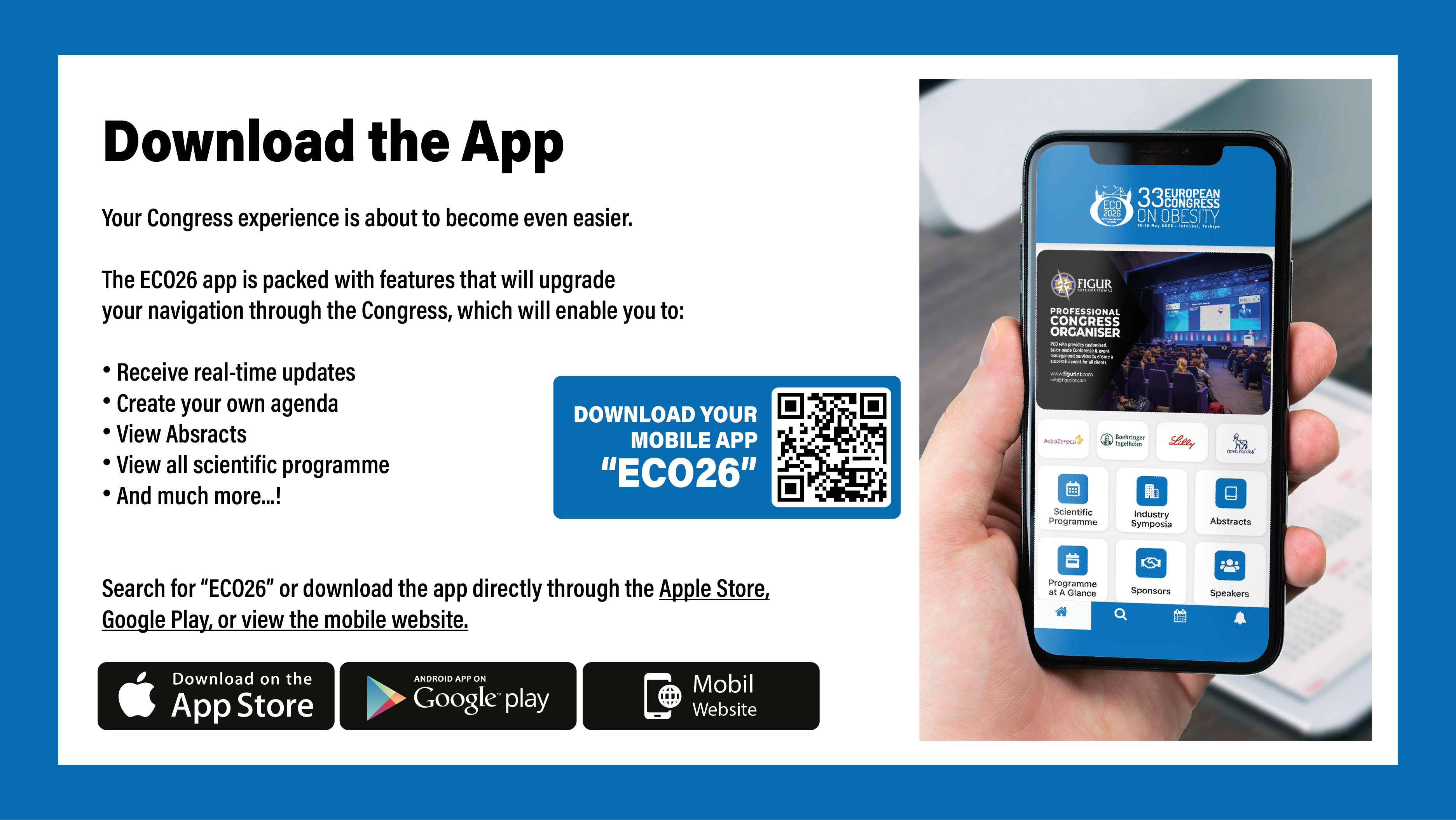
- All accepted Guided Posters will be listed in the official scientific programme and will also be accessible via the congress mobile application.
We sincerely appreciate the contributions of all presenters and session chairs in making these sessions an engaging and valuable part of the ECO programme.